
Breitling Navitimer 806 AOPA - All Black
legendary pilot's chronograph in its first execution - Cal. Venus 178
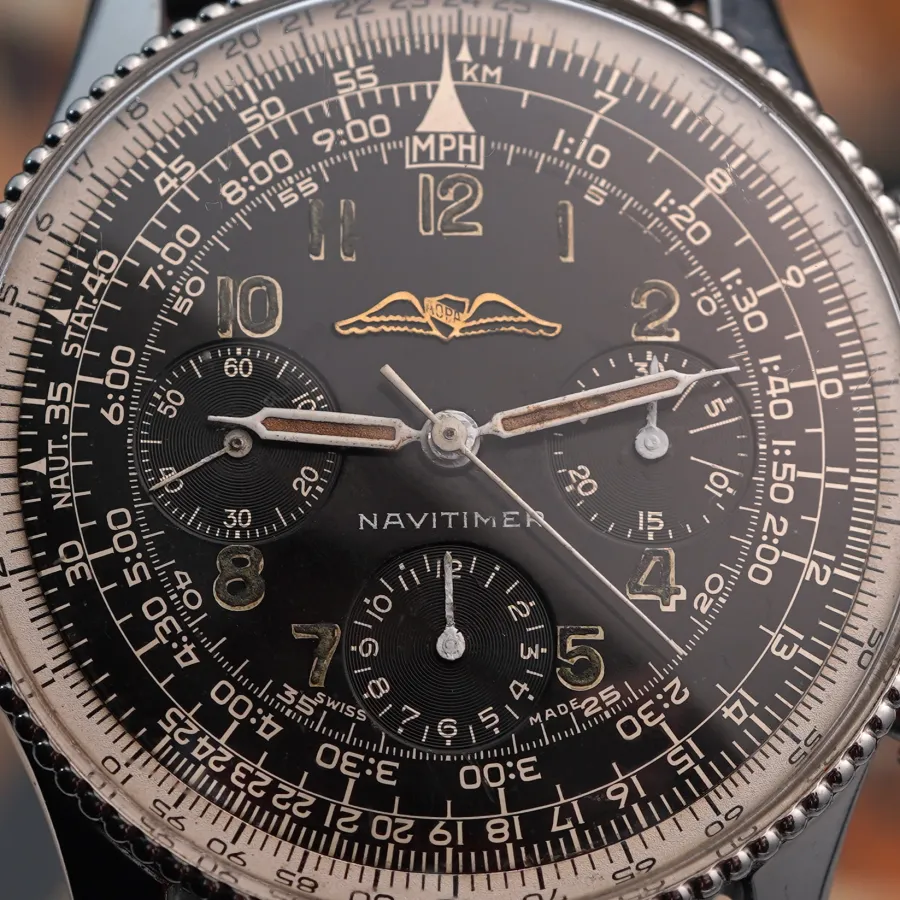
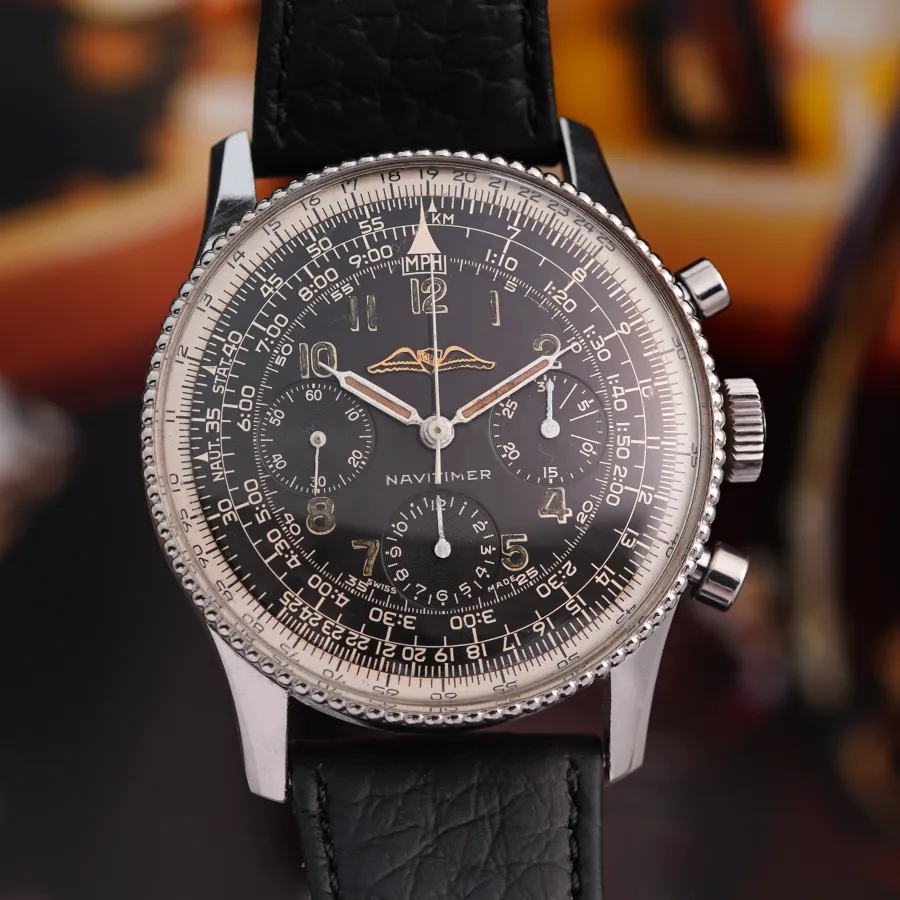
The Navitimer was developed in the 1950s as a chronograph specifically designed for the requirements of aviation. Its defining feature is the complex slide-rule bezel, which allowed pilots to perform various flight-related calculations directly on the wrist – including conversions between miles, kilometers and nautical miles, as well as calculations involving speed, distance and fuel consumption. This combination of a mechanical chronograph and a functional calculation instrument made the Navitimer one of the most unmistakable pilot’s watches of its era.
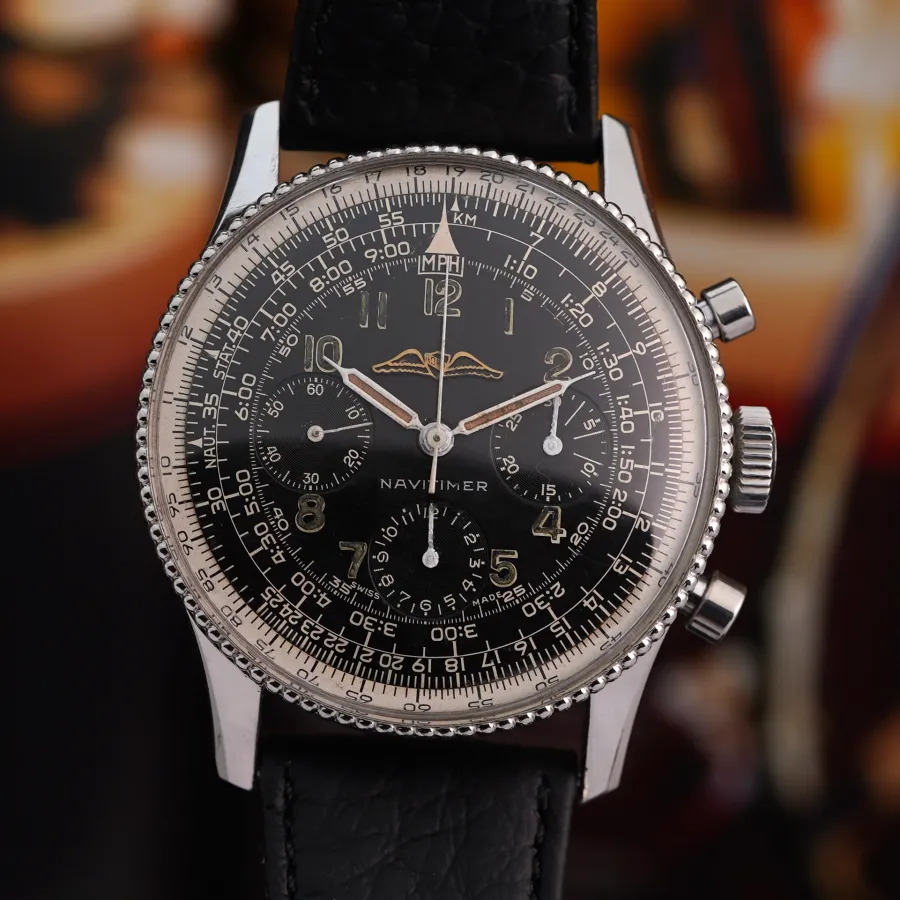
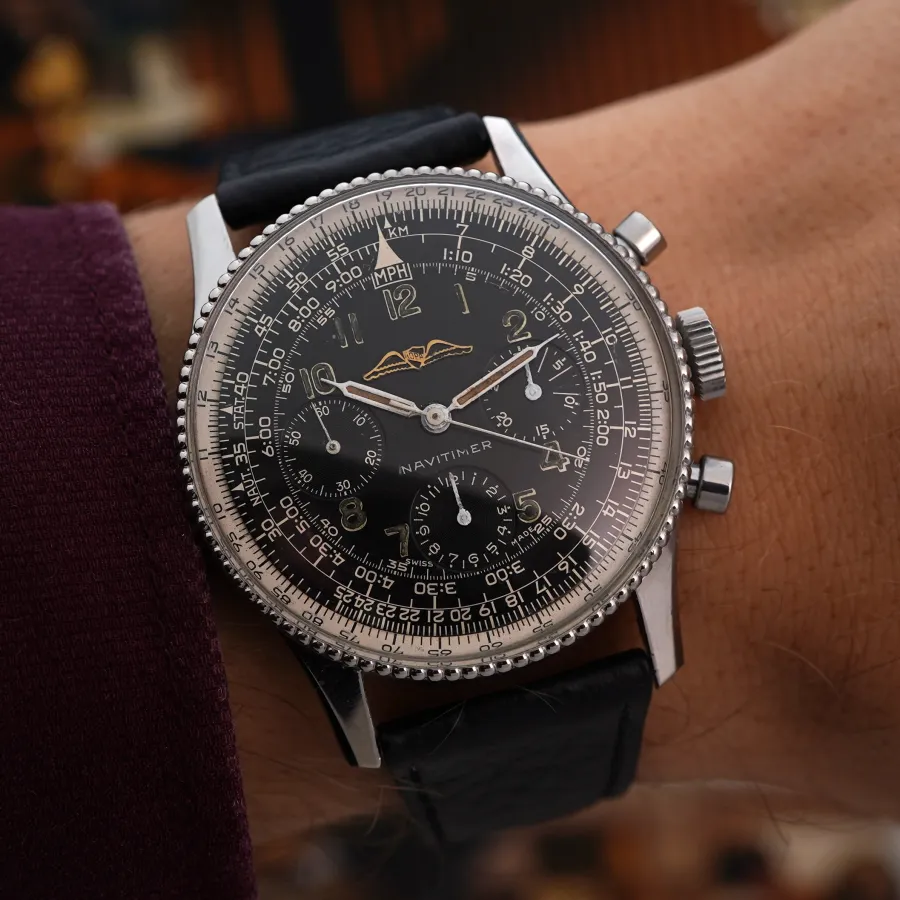
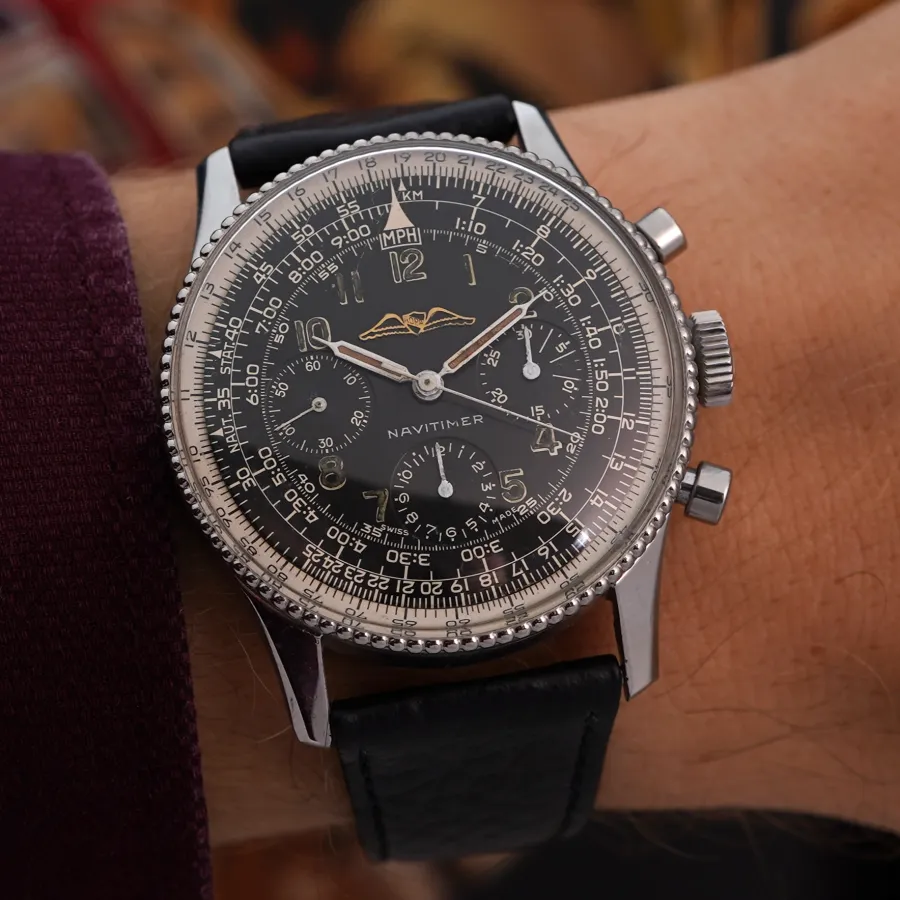
Particularly fascinating are the early examples of Ref. 806 featuring a black dial with matching black subdials. Today commonly referred to as the “All Black”, this configuration differs significantly from later Navitimer versions with contrasting light-colored registers. Its monochromatic appearance gives the watch a distinctly technical, instrument-like character and makes these early All-Black models especially collectible within the long history of the Navitimer.
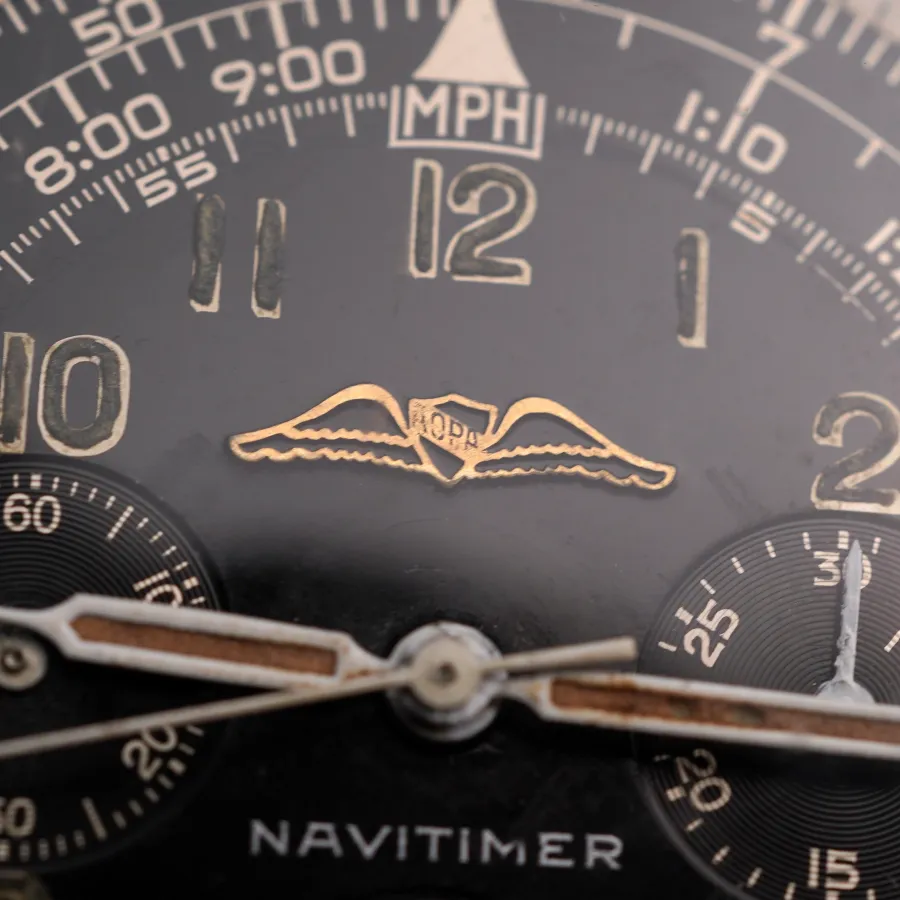
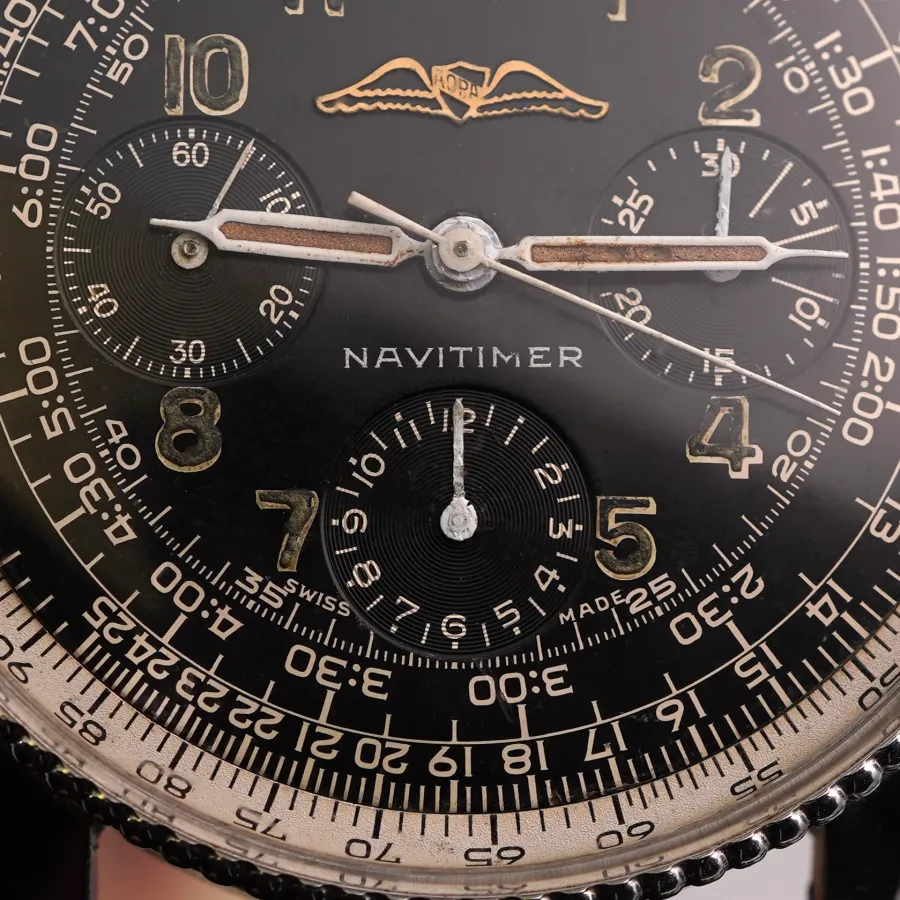
Another important detail of this example is the fully spelled-out AOPA logo below the 12 o’clock position. The Aircraft Owners and Pilots Association played an important role in the early history of the Navitimer and symbolizes the model’s close connection to both private and professional aviation. At the same time, the gold-colored emblem provides an attractive contrast against the black dial and gives this early version a particularly distinctive appearance.
The original dial has survived for more than six decades with a remarkably beautiful and authentic aging. Its black surface displays an even vintage patina, while the numerous scales, inscriptions and fine details remain clearly visible. Particularly attractive is the aged luminous material on the Arabic hour markers and hands, adding further historical character to the technically complex dial.
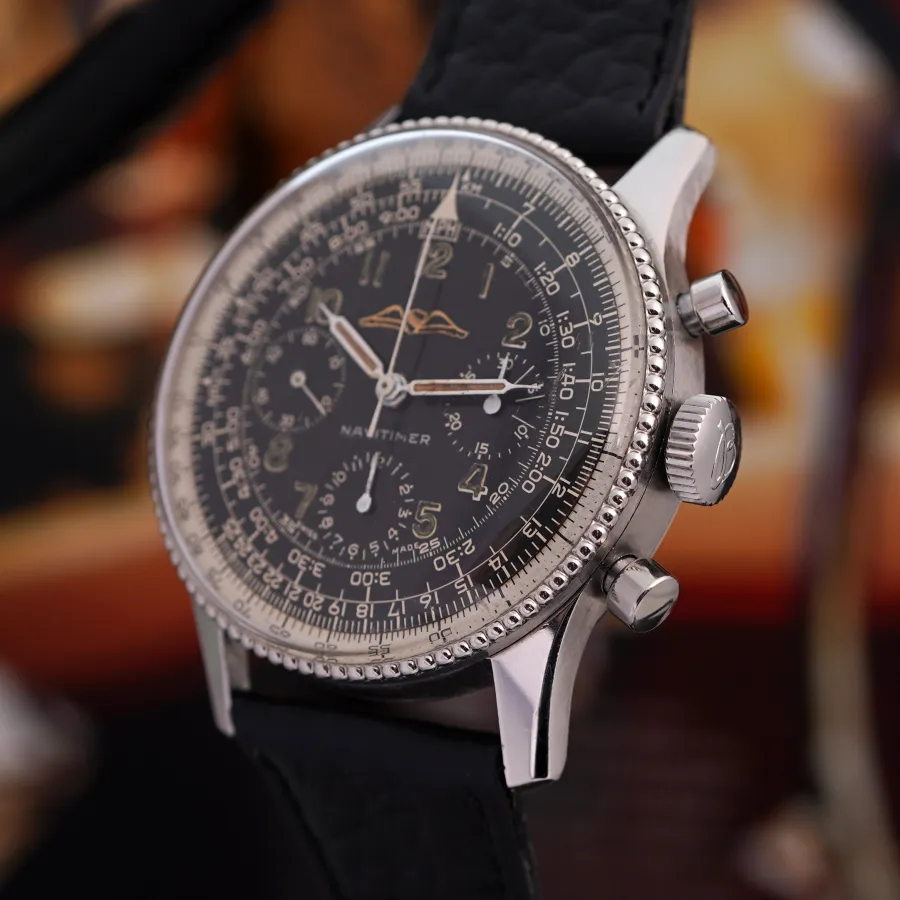
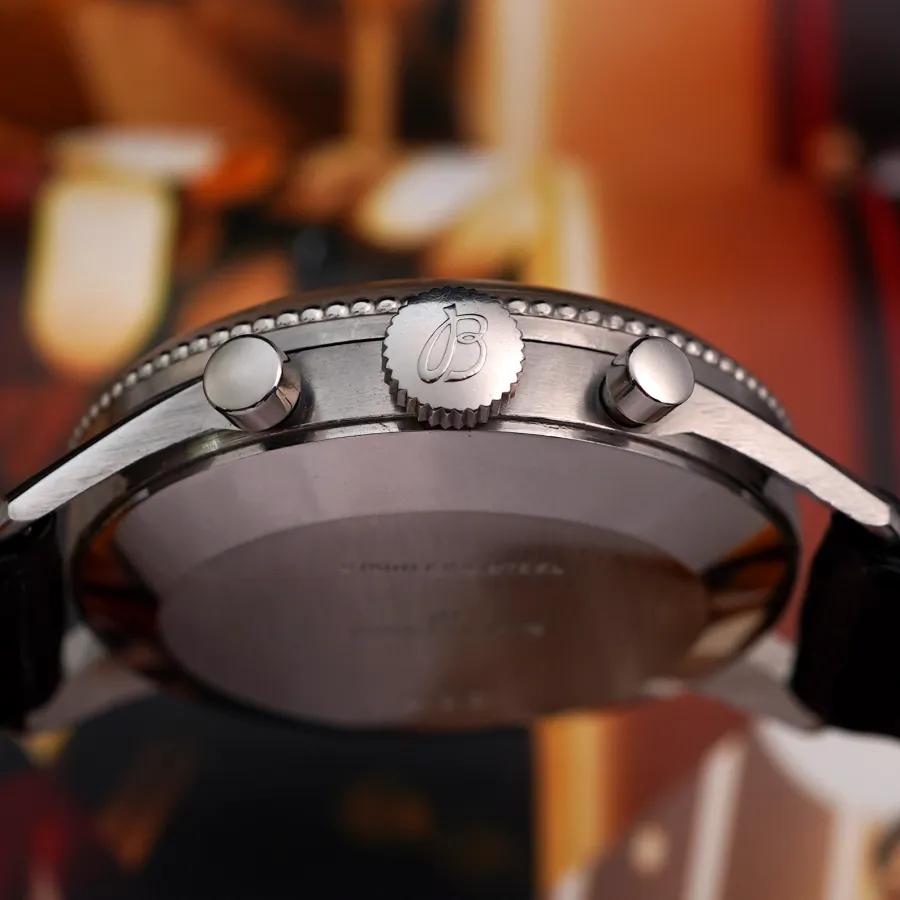
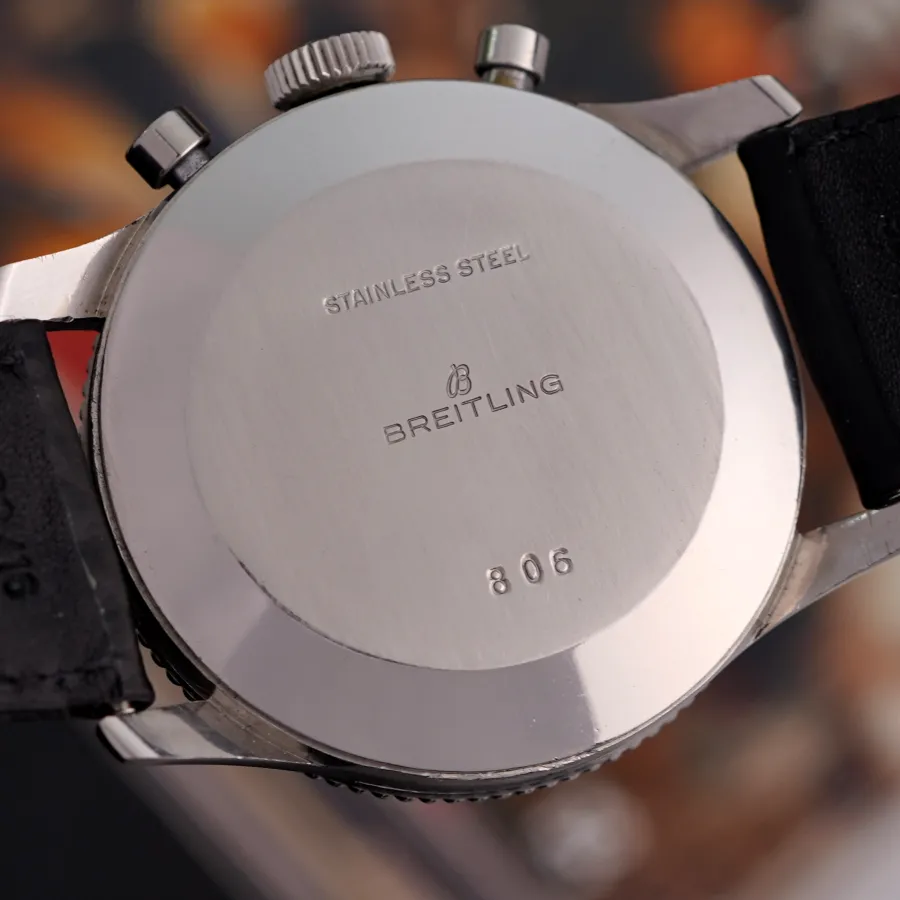
The stainless-steel case, with its characteristic finely serrated slide-rule bezel, also displays the typical proportions of an early Navitimer. The elongated lugs, pump pushers and large winding crown emphasize the functional tool-watch character of the watch and, together with the black dial, create the unmistakable appearance of the Ref. 806.
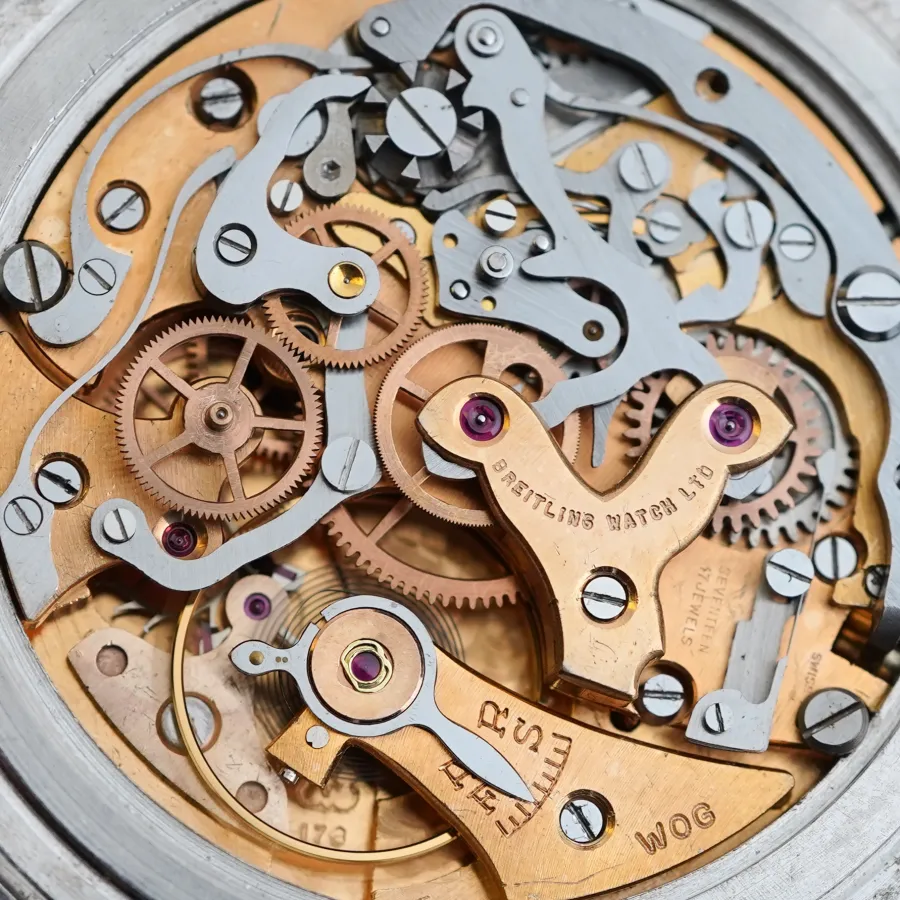
Inside is the manually wound Venus 178 caliber. This classic column-wheel chronograph movement is inseparably associated with the early Navitimer and ranks among the renowned chronograph calibers of its era. Its robust construction and traditional architecture perfectly complement the instrument-oriented character of the Ref. 806.
The Navitimer remains one of Breitling’s best-known models to this day. The early All-Black examples, however, represent the original concept behind the model in perhaps its purest form: a mechanical chronograph that was not merely inspired by aviation, but genuinely conceived as a functional instrument for pilots. Combined with the fully spelled-out AOPA logo and its authentic aging, this example is a particularly attractive representative of the early Navitimer generation and a historically significant pilot’s chronograph with strong collector appeal.
Condition report
Dial: greatly preserved all black dial - natural signs of aging - original radium luminous material on hour markers and hands - greatly preserved printing - signed “AOPA Navitimer Swiss Made”.
Case: excellent condition - light signs of wear - well-preserved bevels and edges - intact engravings on the outer caseback - serial number on the inside of the caseback - original Breitling crown.
Movement: manually wound Venus 178 caliber in excellent condition - timegrapher readings: rate +6 s/day, beat error: 0.7 ms, amplitude: 311 degrees.
Serial number: 912xxx (1959)
Int.Exe.: 12650
Manufacturer: Breitling
Model: Navitimer
Reference: 806
Functions: small running second - hour and minute - rotating bezel - tachymeter - 12 hour totalizer - 30 minutes counter - screwed-on caseback - chronograph
Material: Stainless steel
Dial: black
Watch glass: acrylic crystal
Bracelet: leather
Diameter: 40mm
Caliber: Venus 178
Movement type: manual wind
Year of Manufacture: 1959
Overall condition: 9 - has rarely been worn - top condition
All shipments are insured and available worldwide, with shipping and returns covered by us. If you are not completely satisfied with your purchase, you may return the watch in its original condition within 14 days of receipt, no questions asked.
Protecting your privacy is important to us. Your personal information, including address, login and payment details, is securely transmitted using encryption to ensure it is safe from unauthorized access.
Your trust is our commitment - ensuring a safe and seamless shopping experience.
Get to know us better - learn more about our team and our global references.
All watches are located in our office in Munich, Germany. You are very welcome to visit us.
Make an appointment