Universal Genève Tri-Compax 22297/1 Spillino
unqiue patina - full calendar chronograhp and moonphase
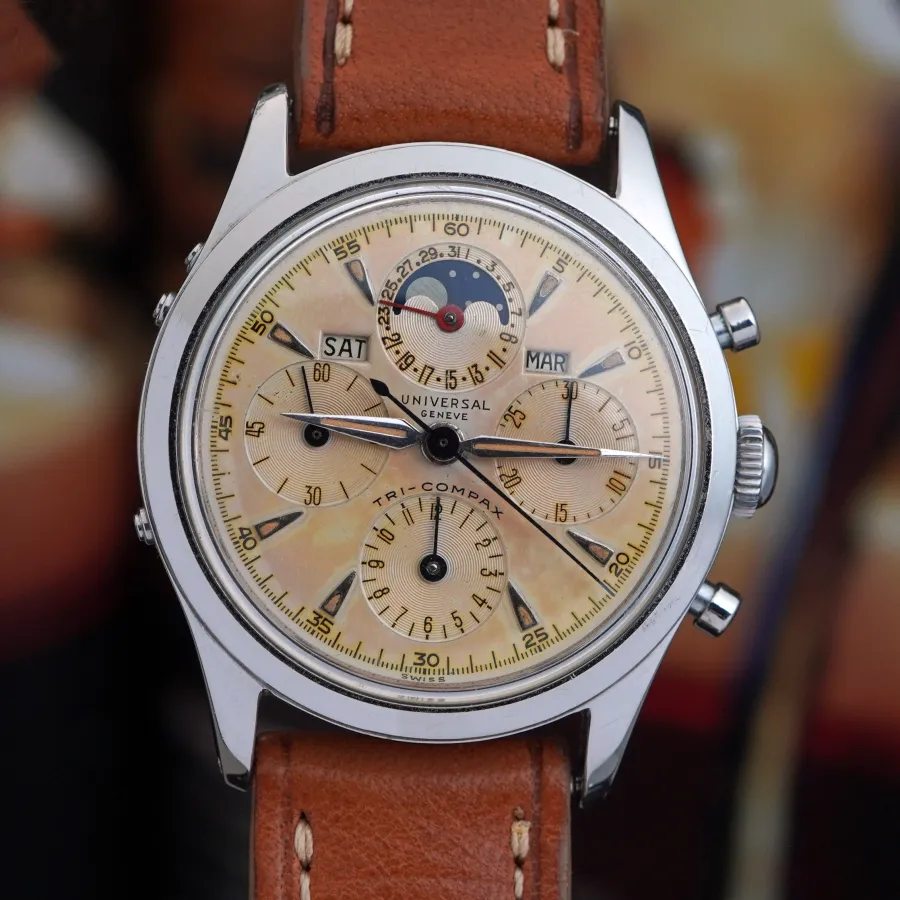
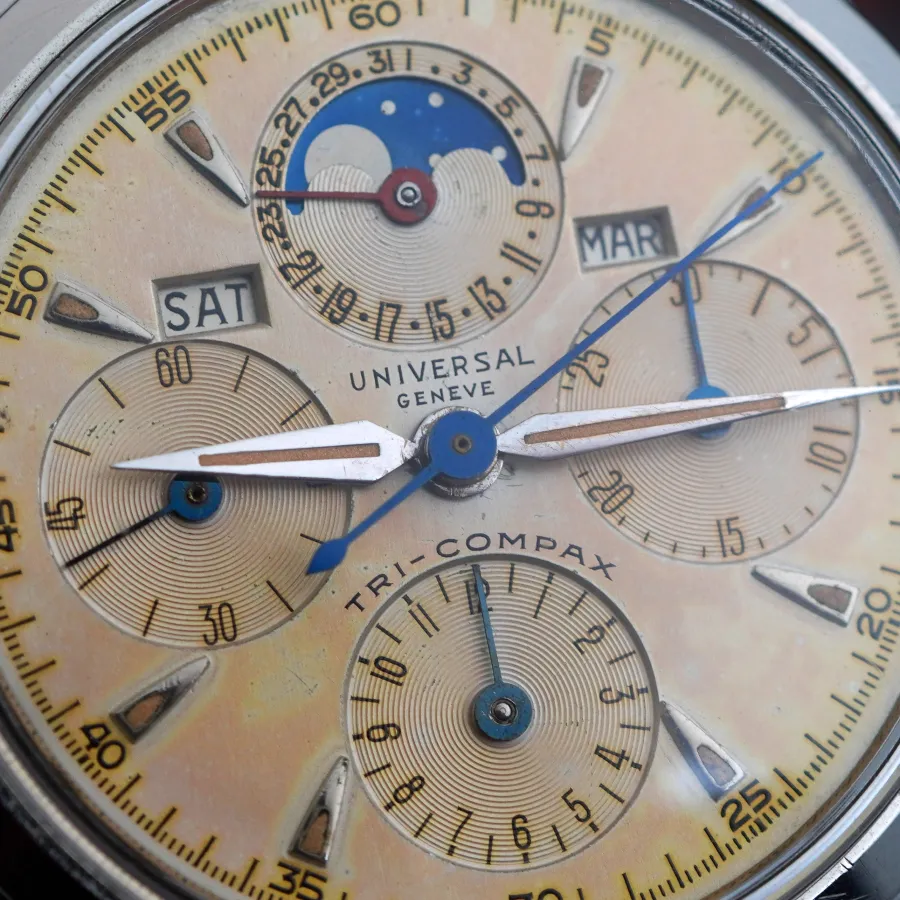
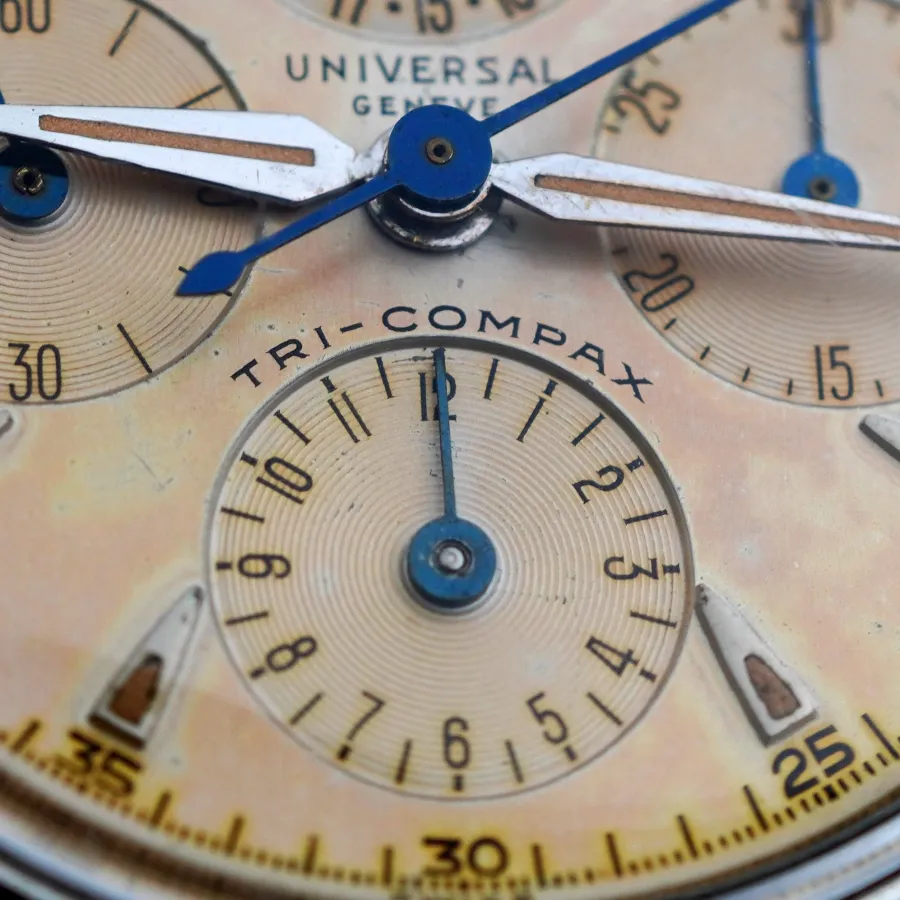
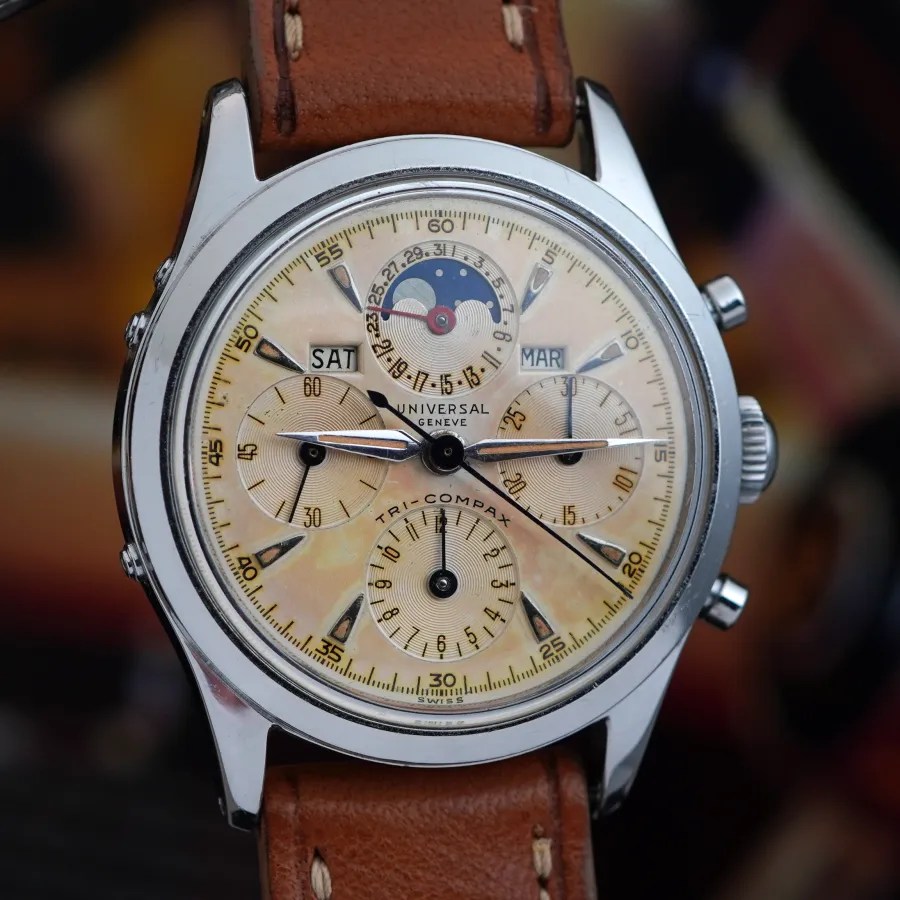
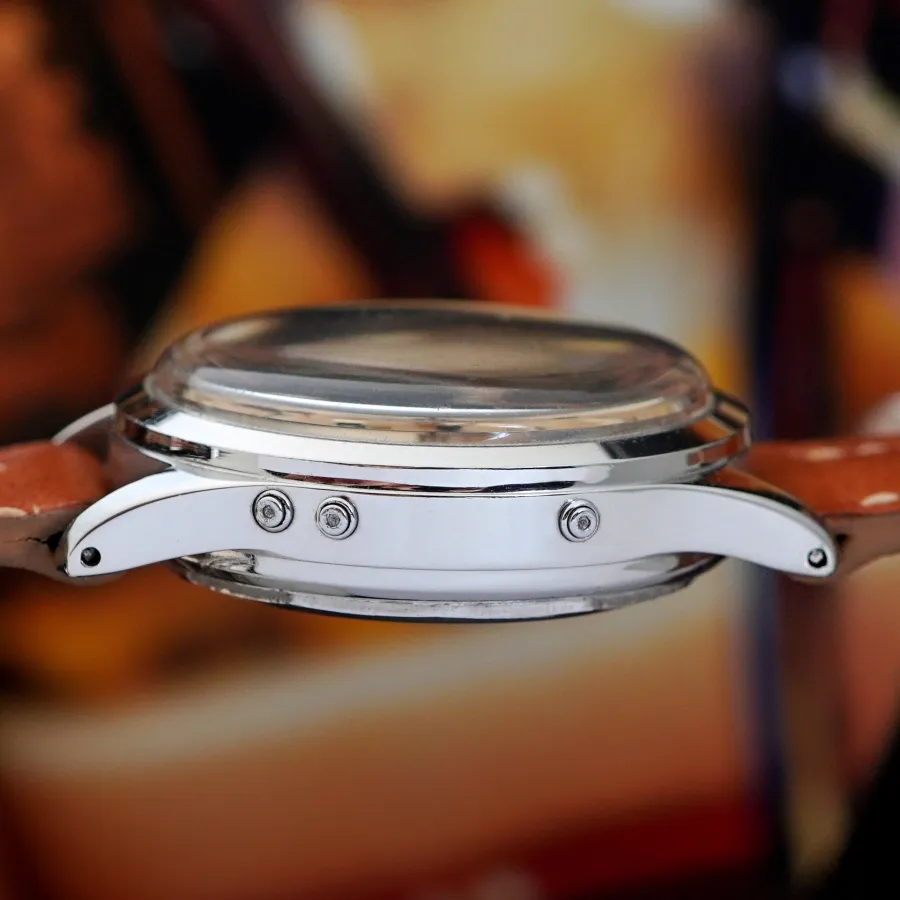
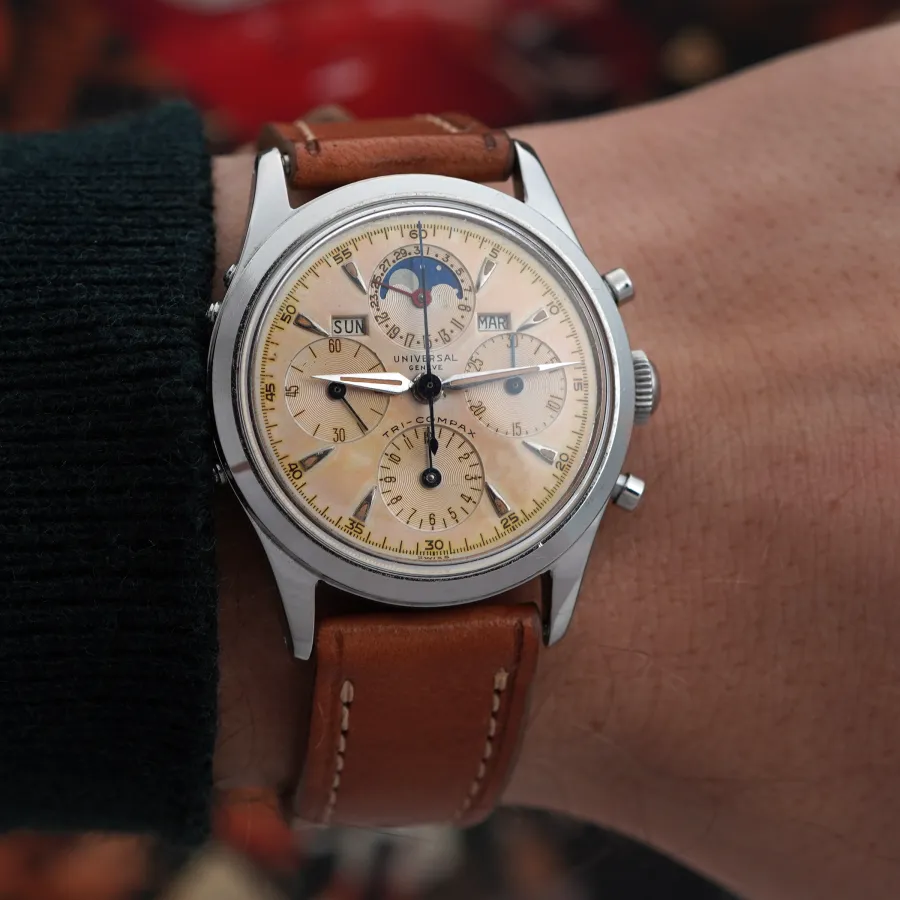
The Tri-Compax is one of Universal Genève’s most significant historical models, combining a chronograph with a complete calendar and moon phase. Despite the wealth of information displayed, the dial remains clearly structured: the 30-minute chronograph counter is positioned at 3 o’clock, the 12-hour counter at 6 o’clock and the small seconds at 9 o’clock. The subdial at 12 o’clock combines the moon phase with a pointer date, while the day of the week and month are displayed in two separate apertures in the upper section of the dial. Small correctors on the side of the case allow the calendar functions to be adjusted directly.
Particularly appealing is the original dial of this example, which has developed a pronounced and entirely individual patina over more than 70 years. Its originally light surface now displays warm cream-to-champagne tones with varying traces of ageing. The finely guilloché subdials, blue moon-phase disc and red date hand provide subtle touches of colour. The applied hour markers and matching hands retain their visibly aged luminous material, further emphasizing the authentic vintage character of the watch.
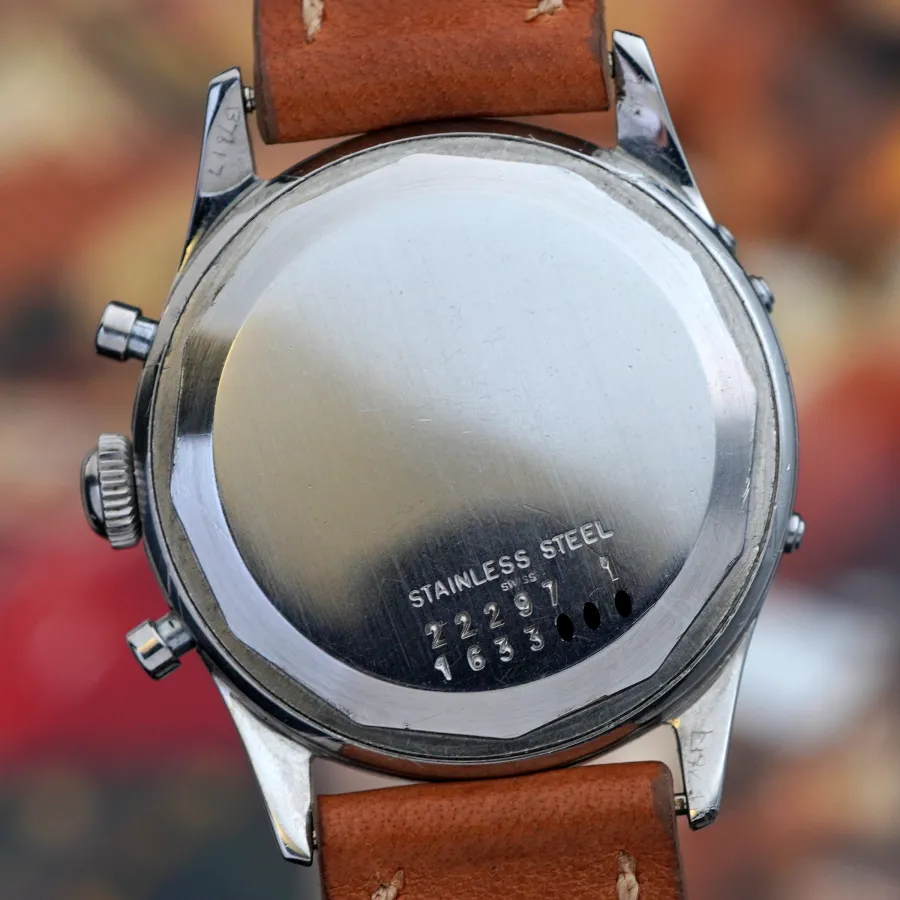
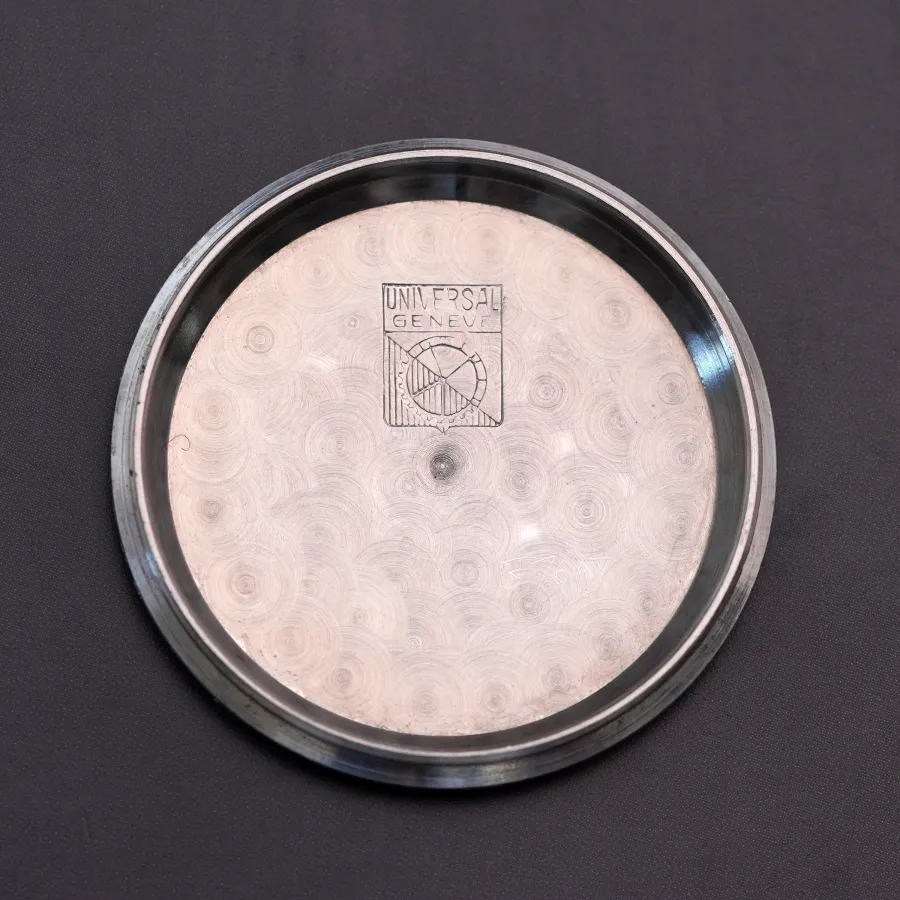
The 35 mm stainless-steel case features the characteristic proportions of this Tri-Compax generation, with elongated lugs and notably small round chronograph pushers. It was precisely these slender, almost pin-like pushers that led Italian collectors to adopt the nickname “Spillino”. The term was never an official historical model designation used by Universal Genève, but has become an established collector nickname for corresponding Tri-Compax executions. The case shows age-appropriate signs of wear and use, while its original shape and, in particular, the deeply stamped markings on the caseback remain very well preserved. The caseback bears the reference 22297/1 and the serial number 1.653.xxx.
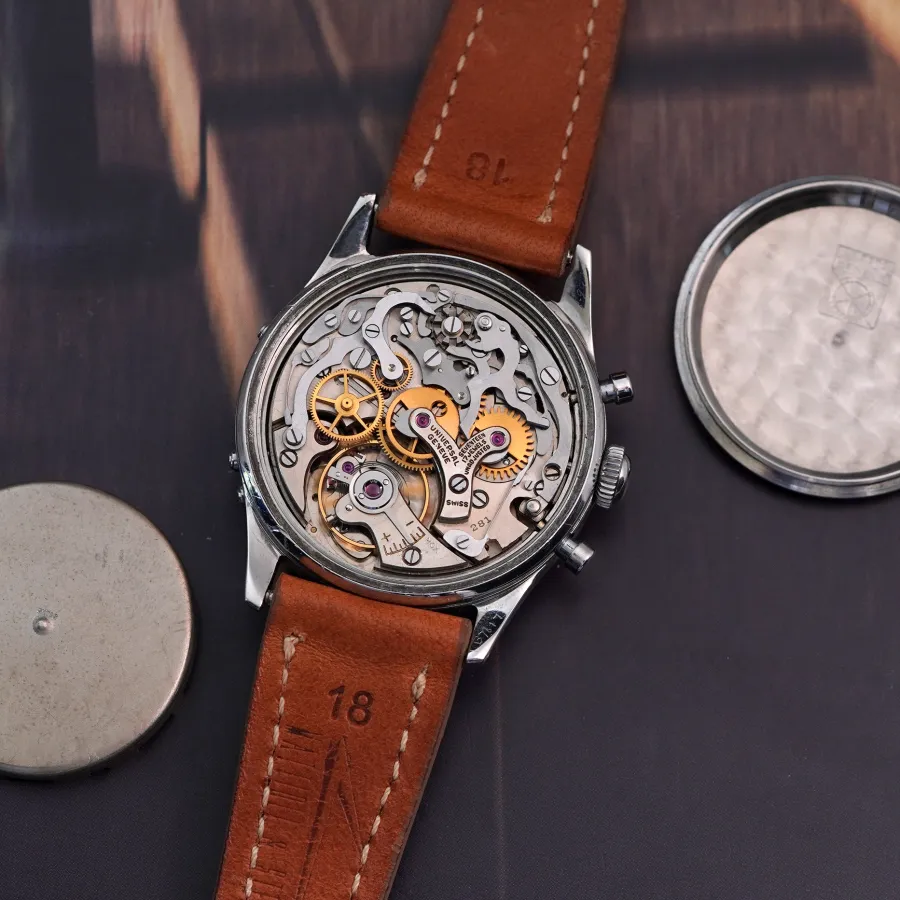
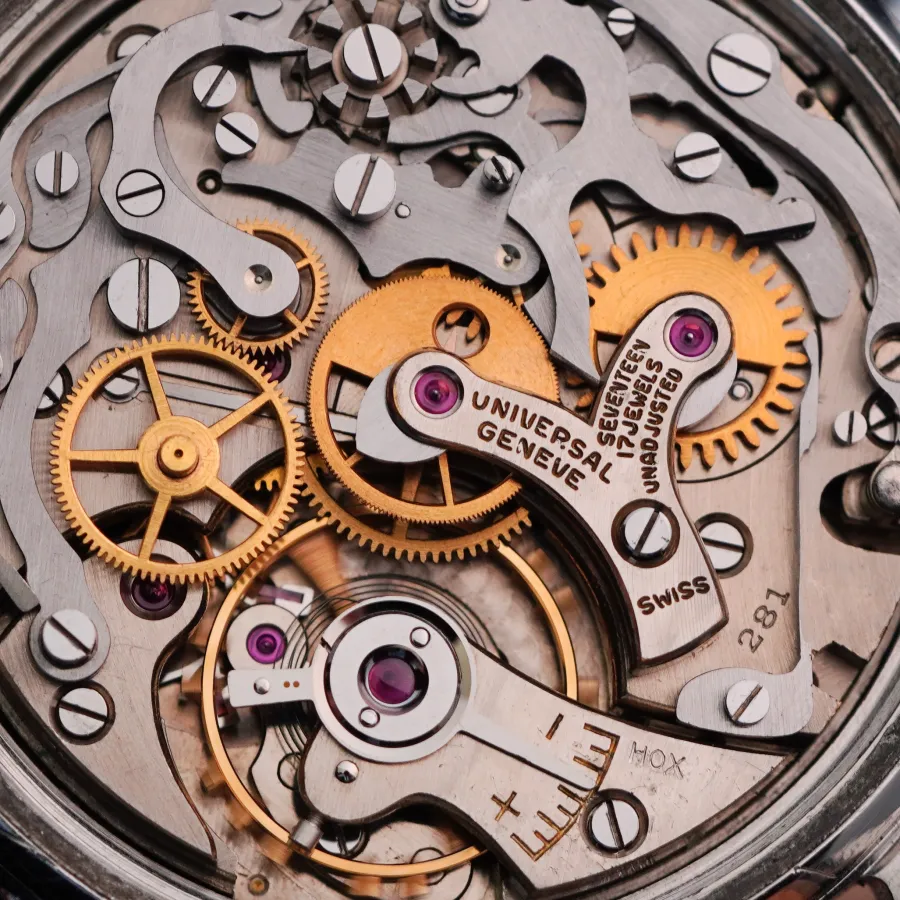
Inside is the Universal Genève Calibre 281, a fully integrated manually wound movement combining the chronograph, calendar and moon-phase functions. The movement presents itself in exceptionally clean visual condition.
The Universal Genève Tri-Compax Ref. 22297/1 “Spillino” is representative of the technically sophisticated chronographs that helped establish Universal Genève’s reputation during the middle of the 20th century. In this particular example, the complex Tri-Compax functionality, characteristic 35 mm stainless-steel case and strongly yet harmoniously aged original dial come together in an authentically preserved watch dating from 1954.
Condition Description
Dial: original dial with an exceptional patina that has developed naturally over more than 70 years - originally light surface now displaying warm cream-to-champagne tones - original printing and scales very well preserved - applied hour markers and hands with original luminous material - signed: "UNIVERSAL GENÈVE Tri-Compax Swiss".
Case: 35 mm stainless-steel case in very good condition - well-preserved lugs - characteristic small “Spillino” chronograph pushers - light signs of wear and use - deeply stamped and exceptionally well-preserved reference and serial numbers on the caseback - lug width: 19mm.
Movement: Universal Genève manually wound Calibre 281 - chronograph, complete calendar and moon phase function perfectly - rate approximately +5 seconds/day - amplitude 314° - beat error 1.2 ms.
Serial number: 1633xxx (1954)
Int.Exe.: 53257
Manufacturer: Universal Genève
Model: Tri-Compax
Reference: 22297/1
Functions: chronograph - day of the week - small running second - hour and minute - stopwatch - month - tachymeter - quickset date - 12 hour totalizer - 30 minutes counter - screwed-on caseback - date
Intricacies: moon phase
Material: Stainless steel
Dial: silver colored
Watch glass: acrylic crystal
Bracelet: leather
Diameter: 35mm
Caliber: Universal Genève 281
Movement type: manual wind
Year of Manufacture: 1954
Overall condition: 8 - worn regularly - light signs of wear
All shipments are insured and available worldwide, with shipping and returns covered by us. If you are not completely satisfied with your purchase, you may return the watch in its original condition within 14 days of receipt, no questions asked.
Protecting your privacy is important to us. Your personal information, including address, login and payment details, is securely transmitted using encryption to ensure it is safe from unauthorized access.
Your trust is our commitment - ensuring a safe and seamless shopping experience.
Get to know us better - learn more about our team and our global references.
All watches are located in our office in Munich, Germany. You are very welcome to visit us.
Make an appointment