Minerva 1940s Pilot's Chronograph - 46 mm
monopusher chronograph - oversized case - Cal. 19-9CH
The history of Minerva dates back to 1858, when the company H. & C. Robert was founded in Villeret, Switzerland. In 1887, the company, later known as Robert Frères, registered the Minerva name, which represented the finest timepieces within its portfolio. From 1908 onwards, the manufacture increasingly specialized in the development and production of precision chronographs, earning an outstanding reputation for its technical innovations within just a few years.
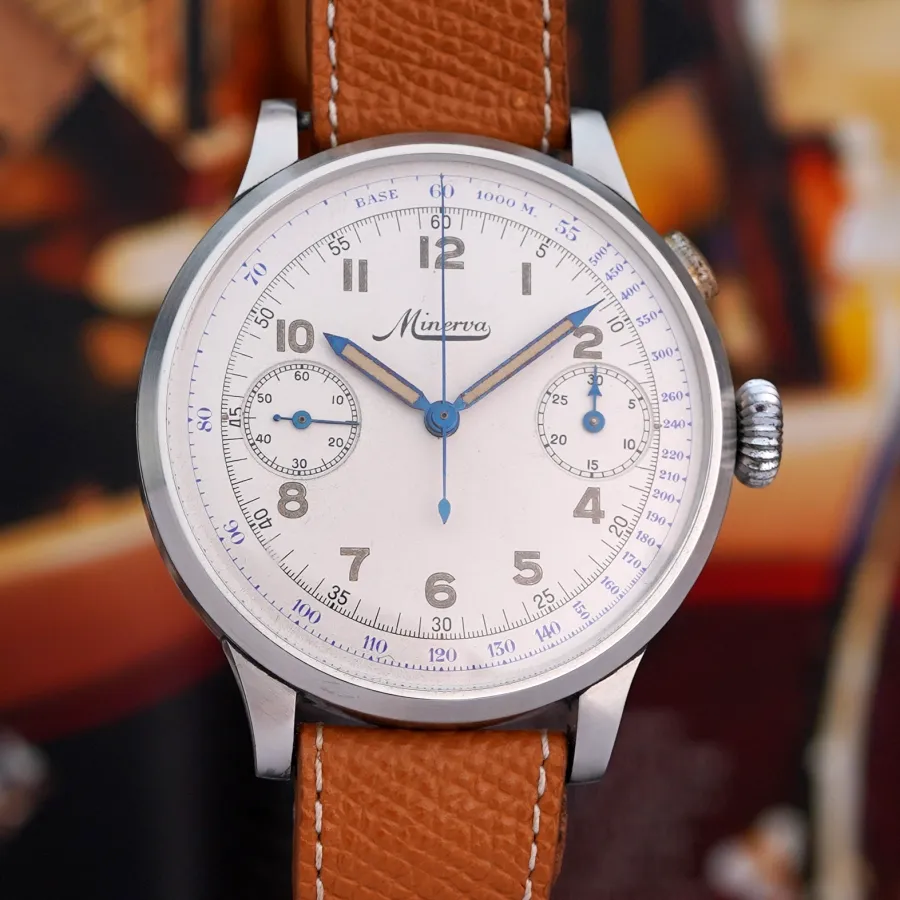
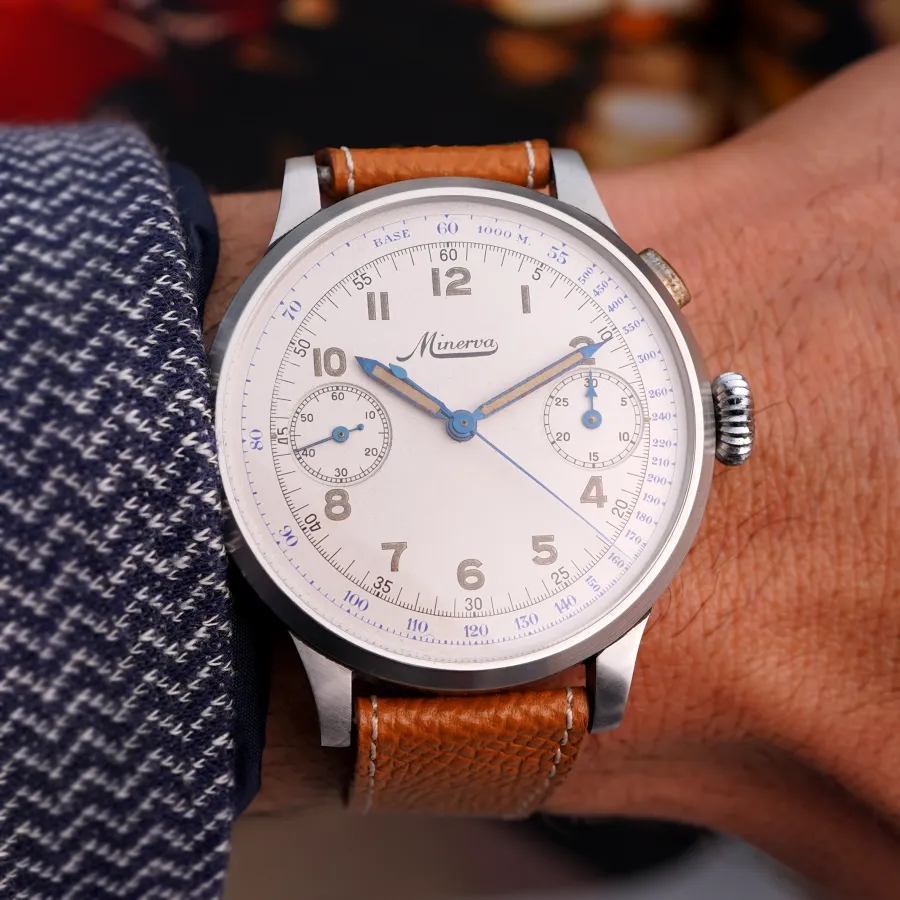
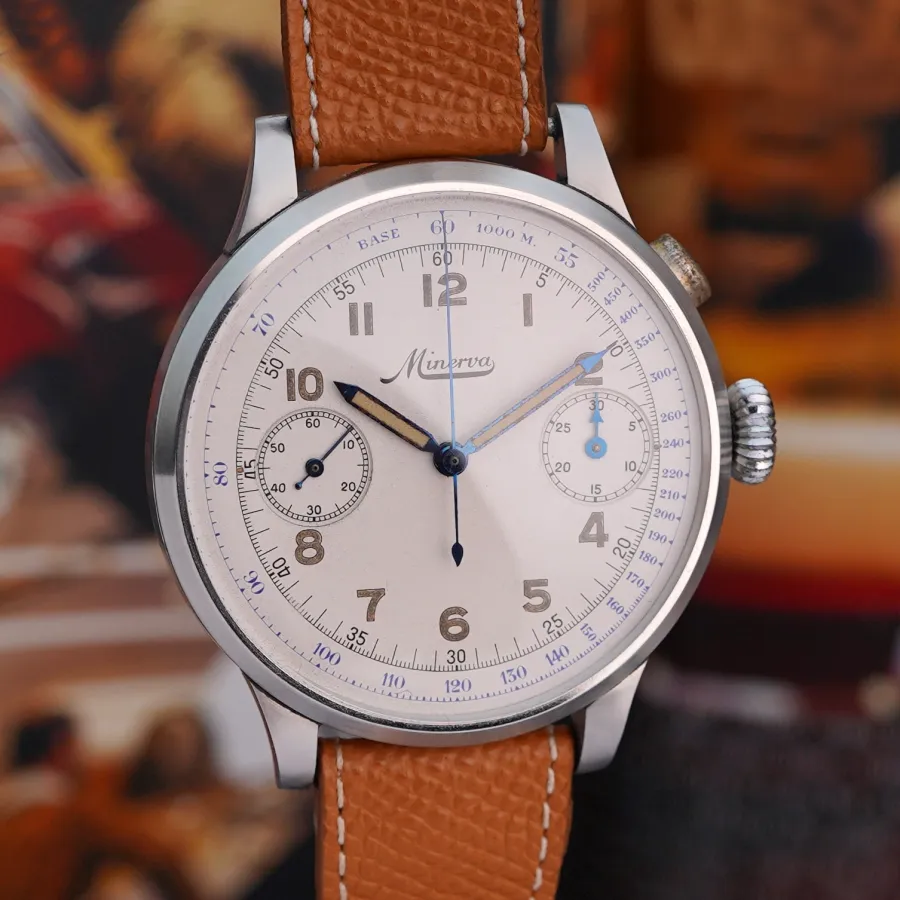
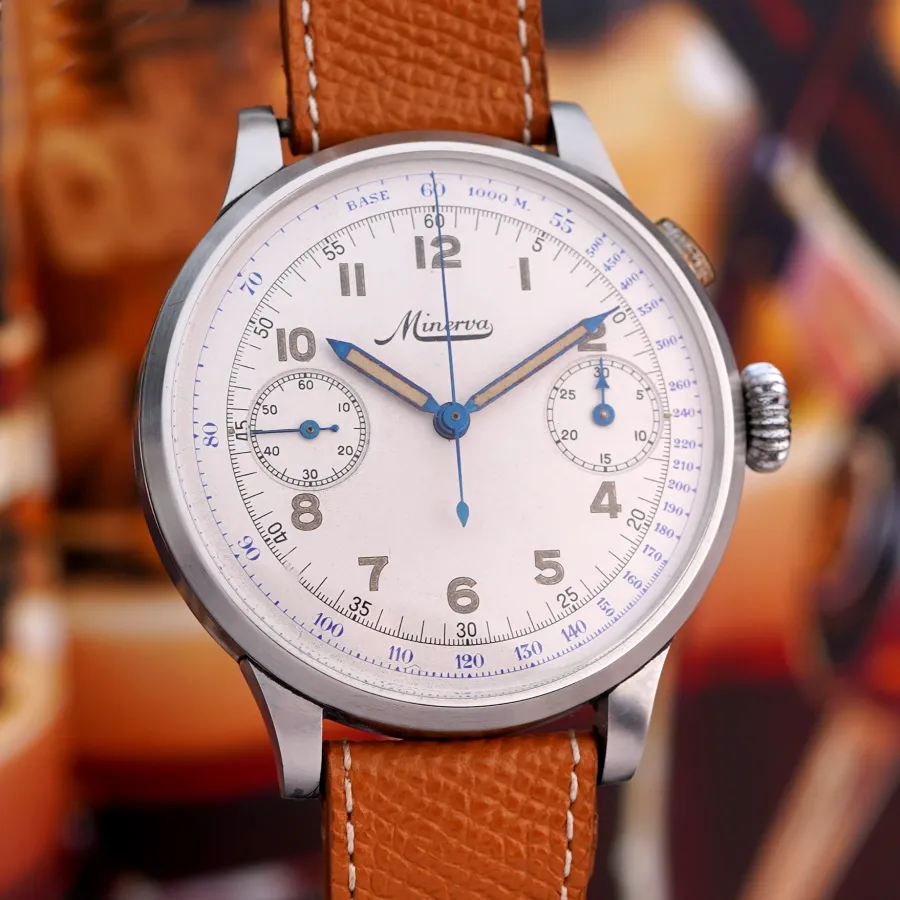
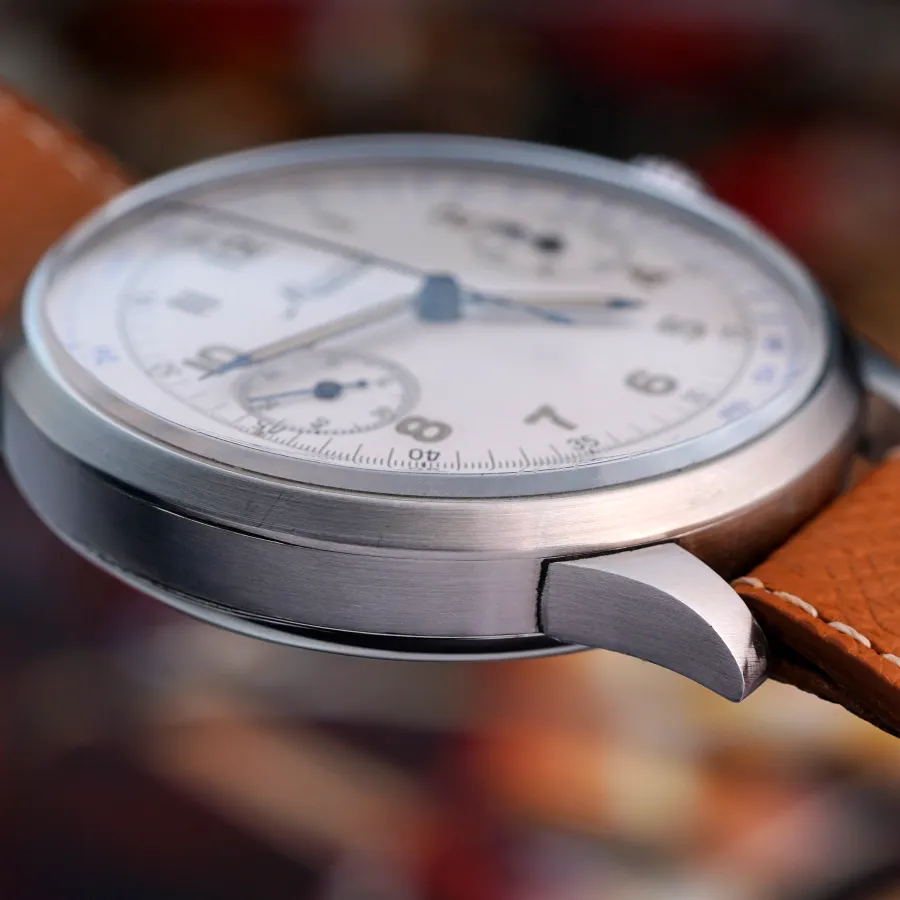
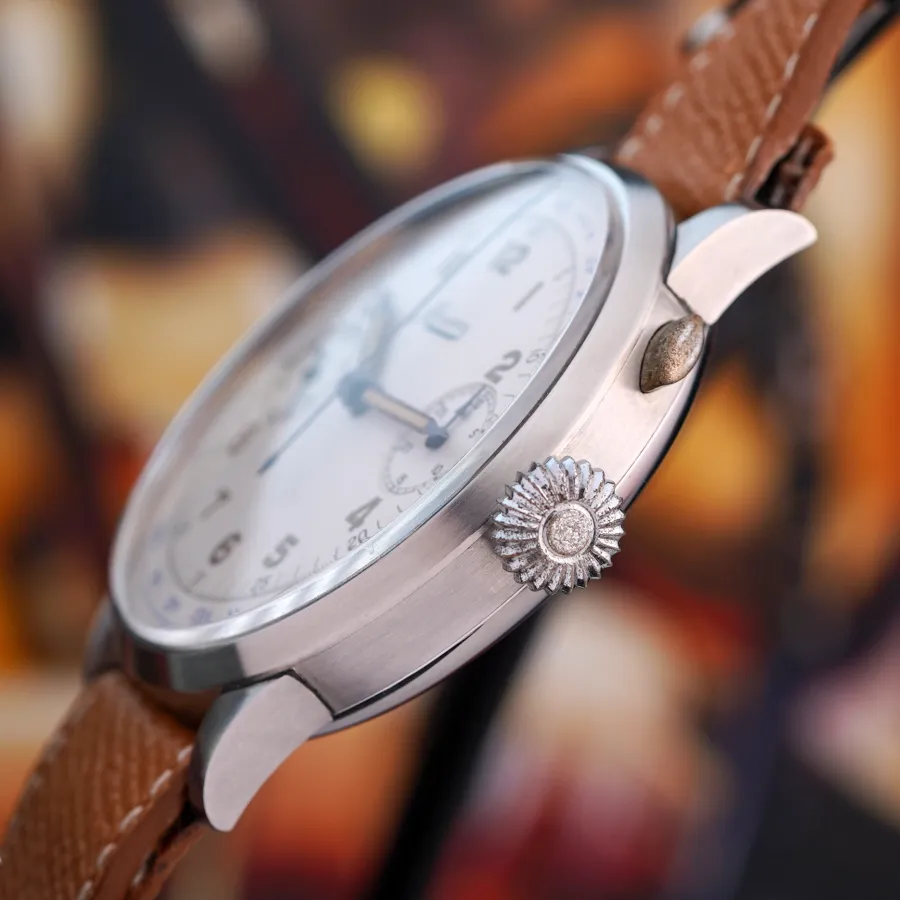
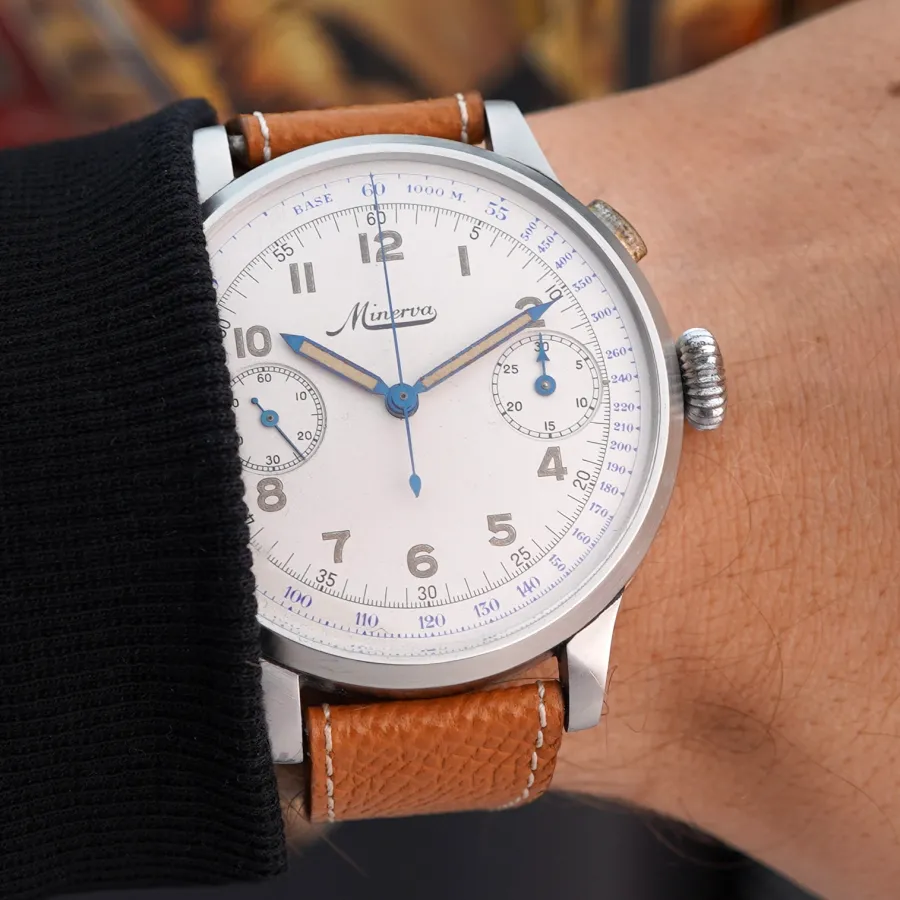
One of the most remarkable features of this chronograph is undoubtedly its exceptionally large stainless steel case. With a diameter of 46 mm, the watch was truly monumental for its time. Such dimensions were virtually unheard of in conventional wristwatches around 1940 and were generally reserved for specialized timing instruments. Its generous proportions, highly legible dial and functional design suggest that it was originally intended for aviation or other technical applications. The substantial lugs, large fluted crown and separate chronograph pusher further emphasize the instrument-like character of this extraordinary wristwatch. These early Minerva chronographs with such oversized cases were produced in very small numbers and are consequently extremely rare on today's collectors' market.
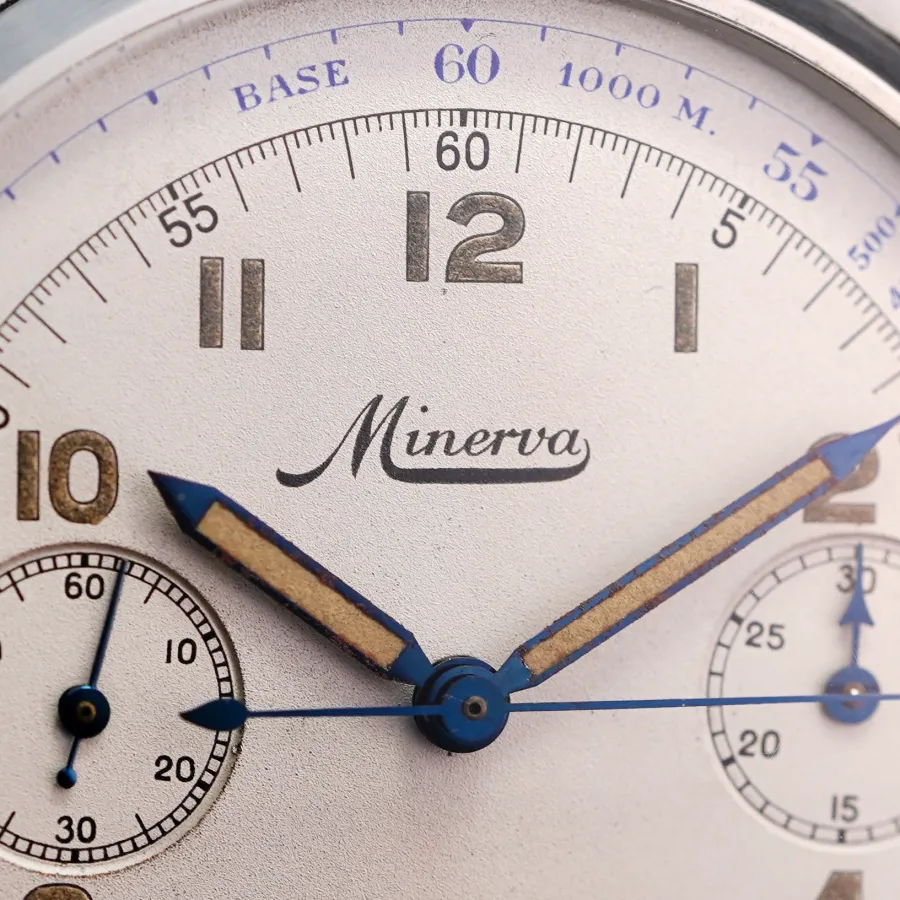
The original white dial is preserved in exceptionally beautiful condition. Under magnification, a fine patina that has developed naturally over the decades becomes visible, emphasizing the authentic character of the dial. Particularly attractive is the combination of luminous Arabic numerals, two symmetrically arranged subsidiary dials and the finely printed blue tachymeter scale. The elegant, curved Minerva signature beneath 12 o'clock completes the classic design. Especially for a chronograph from this early period, an original light-colored dial preserved in such remarkable condition is an exceptional rarity.
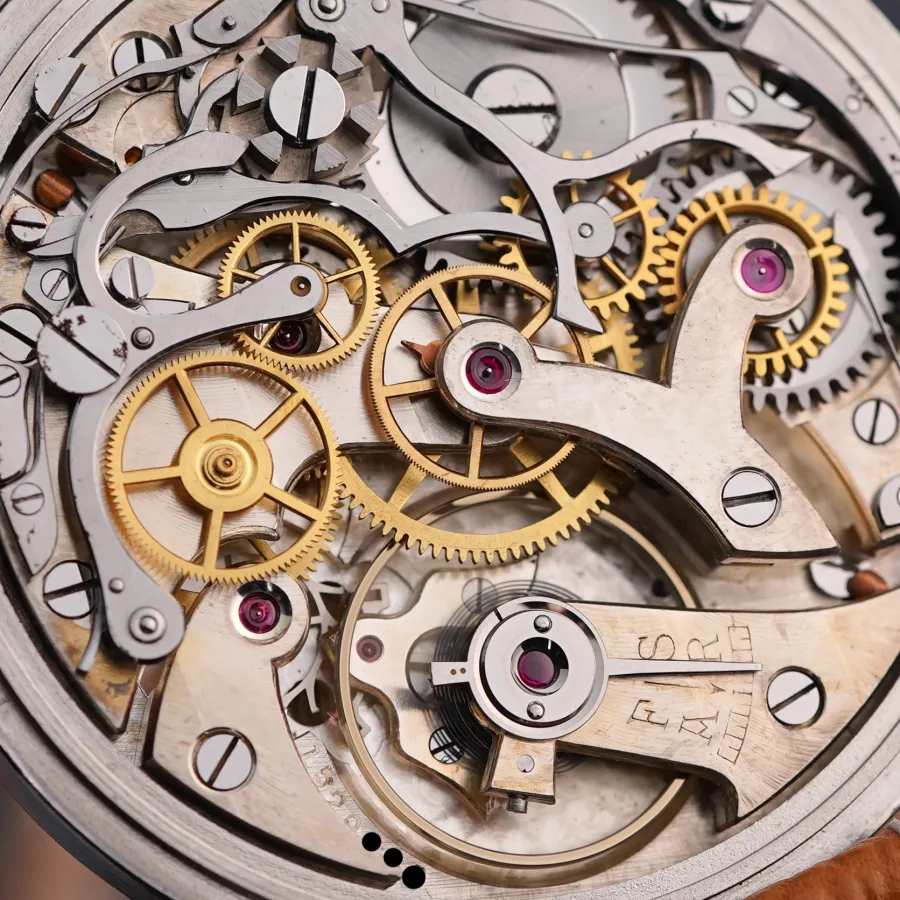
Inside beats the historic Minerva caliber 19/9 CH, an early column-wheel chronograph movement whose construction dates back to a caliber originally developed for pocket watches in 1909. Particularly interesting is its monopusher configuration: all chronograph functions – starting, stopping and resetting – are operated through a single pusher at 2 o'clock. This classic mechanism represents one of the early stages in the development of mechanical wristwatch chronographs and gives the watch particular historical significance from a technical perspective.
This Minerva chronograph combines exceptional rarity with a remarkably authentic state of preservation. Its monumental 46 mm stainless steel case, early monopusher chronograph movement and, above all, its original white dial with subtle, naturally developed patina make it a particularly desirable collector's piece. An impressive testament to the early history of chronograph watchmaking and a historic wristwatch of a kind that is now exceedingly difficult to find.
Condition Report
Dial: original white dial in exceptional condition - subtle, naturally developed patina, particularly visible under magnification - original luminous material on the hour markers and hands - signed: "MINERVA".
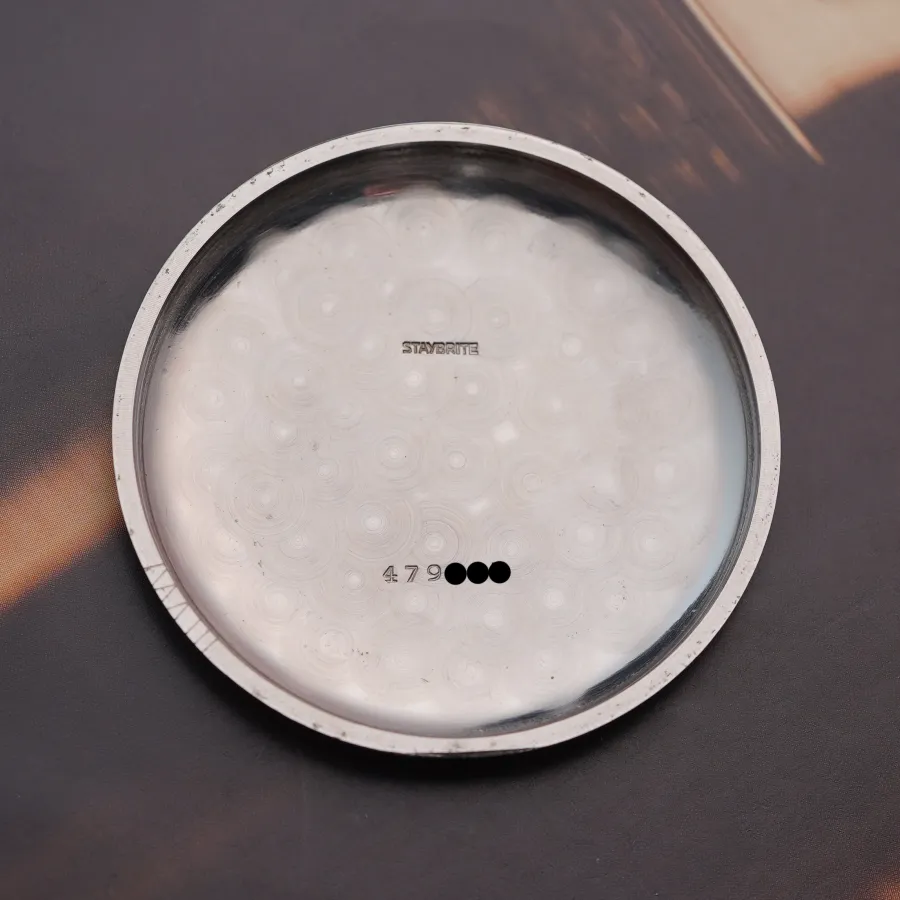
Case: exceptionally large 46 mm stainless steel case in excellent condition - minor signs of wear - sharp, well-defined lugs - inside of the case back marked "STAYBRITE" and bearing case number 479xxx - lug width: 21 mm.
Movement: original Minerva manually wound caliber 19-9 CH - monopusher chronograph with column-wheel mechanism - timegrapher readings: rate: +8 s/day, amplitude: 315°, beat error: 1.2 ms.
Gehäusenummer: 479xxx
Uhrwerksnummer: 1529xxx
Int.Exe.: 1902170
Manufacturer: Minerva
Model: 1940s Pilot's Chronograph
Functions: small running second - hour and minute - tachymeter - 30 minutes counter - Monopusher Chronograph - chronograph
Material: Stainless steel
Dial: white
Watch glass: acrylic crystal
Bracelet: leather
Diameter: 46mm
Caliber: Minerva 19-9 CH
Movement type: manual wind
Year of Manufacture: 1940
Overall condition: 9 - has rarely been worn - top condition
All shipments are insured and available worldwide, with shipping and returns covered by us. If you are not completely satisfied with your purchase, you may return the watch in its original condition within 14 days of receipt, no questions asked.
Protecting your privacy is important to us. Your personal information, including address, login and payment details, is securely transmitted using encryption to ensure it is safe from unauthorized access.
Your trust is our commitment - ensuring a safe and seamless shopping experience.
Get to know us better - learn more about our team and our global references.
All watches are located in our office in Munich, Germany. You are very welcome to visit us.
Make an appointment